
The global shipping industry in 2026 operates under a framework of heightened regulatory scrutiny and complex geopolitical shifts. For manufacturers and project owners, the movement of high-value industrial assets across oceans involves significant financial and legal risks. A single administrative error or a lack of proper certification can lead to the seizure of multi-million dollar equipment at international borders. In this environment, a China International Logistics Company must possess more than just operational experience; it must hold the requisite legal status to protect its clients. Licenses such as the Non-Vessel Operating Common Carrier (NVOCC) and the Federal Maritime Commission (FMC) certification are not merely honorary titles. Instead, they serve as the fundamental boundary of legal identity, determining how a logistics provider handles liability, financial security, and contractual authority.
Choosing a partner without these credentials exposes shippers to a vacuum of accountability. Therefore, understanding the structural advantages of NVOCC and FMC licensing is essential for any enterprise navigating the modern maritime landscape.

The Transformation from Agent to Carrier: The NVOCC Advantage
A primary distinction in the logistics world lies between a traditional freight forwarder and an NVOCC. A traditional agent acts only on behalf of the shipper, often leaving the cargo owner to deal directly with the steamship line in the event of a dispute. However, an NVOCC operates as a "virtual carrier." This status allows the company to take full legal responsibility for the cargo while utilizing the physical vessels of major shipping lines.
Central to this transformation is the authority to issue a House Bill of Lading (HBL). This document is a contract of carriage that grants the NVOCC the power to negotiate freight rates and space directly with vessel operators. For specialized firms like OOGPLUS, based in Shanghai, this legal status provides significant leverage when handling out-of-gauge (OOG) cargo. Because OOGPLUS holds NVOCC certification, it can offer more direct compensation guarantees. Rather than waiting for a shipping line to process a claim, the NVOCC stands as the primary contractual partner. This legal standing also provides the firm with better bargaining power for "hard-to-place" oversized cargo, ensuring that heavy machinery receives priority stowage and protection.
Financial Security and Compliance through FMC Licensing
For shipments involving the North American market or major international trade lanes, the Federal Maritime Commission (FMC) license represents the gold standard of compliance. The FMC serves as a regulatory watchdog, ensuring that maritime providers adhere to fair trade practices and financial transparency. One of the most critical components of this licensing is the mandatory 75,000 USD FMC Surety Bond. This bond serves as a financial "moat," protecting cargo owners against the risk of the logistics provider’s bankruptcy or malpractice.
In the volatile market of 2026, where ocean surcharges and port fees fluctuate rapidly, FMC licensing ensures rate transparency. Licensed providers like OOGPLUS must file their tariffs and service contracts, preventing arbitrary price hikes or hidden costs. This regulatory oversight eliminates legal loopholes that often arise during periods of port congestion or equipment shortages. Furthermore, FMC compliance signals to global authorities that the company follows rigorous anti-corruption and anti-money laundering protocols. For a company managing large-scale industrial projects, this level of verified financial health is indispensable for maintaining a stable supply chain.
The "Trust Premium" in Oversized Project Cargo
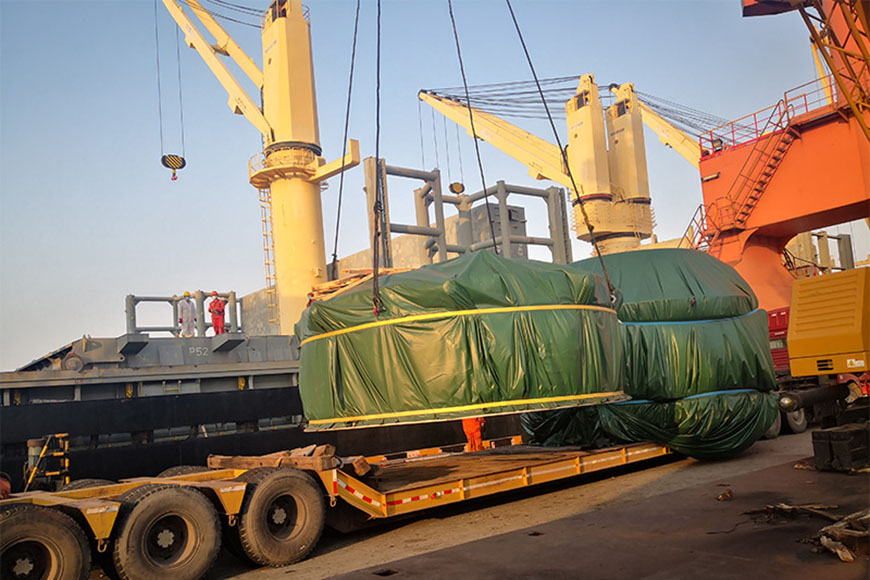
Transporting oversized equipment, such as wind turbine blades or 40-ton transformers, requires a higher level of professional trust than standard container shipping. These projects often involve multi-modal logistics chains spanning several continents. In such scenarios, the logistics specialist must coordinate with a vast network of global partners. Credentials like NVOCC and FMC licensing significantly enhance the "Trust Premium" within organizations like the World Cargo Alliance (WCA).
When a provider has a verified legal and financial standing, international agents and port authorities process their shipments with greater confidence. For OOGPLUS, integrating this professional image with its technical expertise in Shanghai creates a seamless operational flow. Because the firm holds these high-level licenses, it can manage the intricate details of lashing, route surveys, and project management with the full backing of international maritime law. This authority is particularly crucial when coordinating with heavy-lift vessel owners who require proof of the provider's legal and financial capacity before committing specialized deck space. Consequently, the license becomes a tool for efficiency, reducing the time spent on administrative verification at every transshipment point.
Simplifying Complexity through Digital and Legal Integration
The modern logistics specialist does not rely on paperwork alone. By 2026, the integration of digital solutions with legal certifications has become a baseline requirement for high-performance supply chains. A licensed carrier can integrate its digital tracking systems directly with customs and port authorities, providing a level of transparency that unlicensed agents cannot match.
The investment OOGPLUS has made in technology reflects this trend. By combining its NVOCC status with innovative digital tools, the company simplifies the logistics process for its clients. Shippers receive real-time updates and clear documentation that withstands the scrutiny of international customs audits. This synergy between legal compliance and digital innovation enhances the overall customer experience. It ensures that specialized solutions for oversized and heavy cargo remain not only physically safe but also legally and financially secure.
A Strategic Choice for Risk Management
In 2026, selecting a licensed NVOCC and FMC-compliant partner is no longer a matter of administrative preference. It is a strategic decision rooted in risk management and legal protection. As global trade becomes more regulated, the value of a verified professional identity will only increase. Providers like OOGPLUS have established themselves as industry anchors by securing these essential licenses. They offer a one-stop solution that goes beyond traditional transport, bridging the gap between heavy engineering and international maritime law.
For the global cargo owner, these certifications provide the peace of mind that their high-value investments are protected by a robust legal framework. Whether moving cargo by air, sea, or land, the backing of a licensed carrier ensures that every project reaches its destination with its integrity intact.
For more information on professional international logistics and licensed shipping solutions, please visit the official website: https://www.oogplus.com/.
Post time: Jan-28-2026